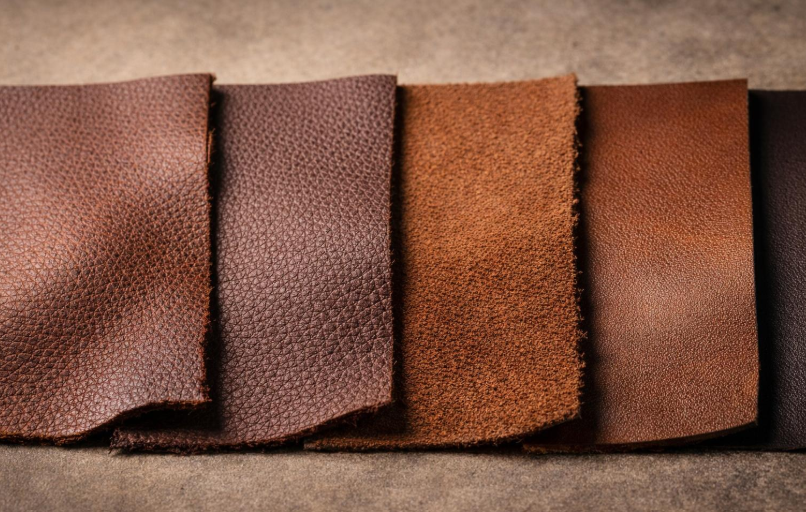
Navigating the grading spectrum
One of the most frequent debates among leather goods designers, boutique studio artisans, and industrial procurement heads revolves around grain selection. Terms like full grain, top grain, and corrected grain are tossed around constantly, but understanding how they translate to cutting yield, edge burnishing, and long-term patina is critical for maintaining product quality.
Operating a finished leather manufacturing line in the Calcutta Leather Complex gives us a direct view of how raw hide selections behave from the wet-end beamhouse all the way to final panel cutting. Here is the practical breakdown.
1. Full Grain: Uncompromised fiber density and patina
Full grain leather utilizes the absolute topmost layer of the hide—the corium junction where collagen fibers are most tightly interwoven. The natural grain surface is left completely intact, meaning all original pores, growth marks, and range scars remain visible.
- Durability: Because the dense fiber structure is untouched, full grain offers the highest tensile and tear strength.
- Patina Evolution: Unsealed by heavy pigments, full grain absorbs oils from handling, darkening and developing a rich, personalized patina over time.
- Breathability: Natural pores remain unobstructed, making it ideal for premium footwear uppers and unlined luxury totes.
2. Corrected and Embossed Grain: Uniformity and scale
When hides exhibit surface blemishes, insect bites, or branding marks that exceed aesthetic tolerances for smooth lines, the grain surface may be lightly sanded or buffed (corrected grain), followed by artificial grain printing or heavy pigment finishing.
This process creates a perfectly uniform texture across the entire hide surface. For high-volume manufacturers, this drastically cuts down cutting waste caused by natural flaws, ensuring every panel pulled from the skin looks identical.
3. Technical Comparison Table
To help production teams select the right grade for their specific application, consider the following performance matrix:
| Metric | Full Grain | Top Grain | Corrected / Embossed |
|---|---|---|---|
| Surface Character | 100% natural, unique marks | Slightly sanded, subtle texture | Uniform, engineered pattern |
| Yield Efficiency | Lower (requires nesting around flaws) | Moderate | High (minimal waste per hide) |
| Edge Burnishing | Excellent (slick and glassy with gum/wax) | Good (depends on retannage) | Poor (requires edge paint/creasing) |
| Ideal Application | Heritage bags, belts, bespoke footwear | Lightweight garments, structured accessories | Volume production, embossed sets, luggage |
4. Yield Calculations & Edge Burnishing Behavior
When planning a production run, material yield is directly tied to grain choice. Full-grain hides require skilled clickers or manual cutters to work around natural range marks, resulting in a lower usable cutting percentage (often 70–80% depending on grading selection). However, the resulting panels command premium retail positioning.
Furthermore, edge burnishing behavior differs dramatically. Full-grain vegetable-tanned or combination-tanned hides with natural protein structures accept water, gum tragacanth, or beeswax readily, allowing artisans to slick edges to a polished, glassy finish. Corrected and heavily pigment-finished leathers have sealed edges that require thermal creasing and polymer edge paint to achieve a clean presentation.
Conclusion: Aligning craft with correct specification
Choosing between full grain and corrected grain is not about finding which is universally "better"—it is about matching the material's structural and aesthetic properties to your product's design intent. Whether you are crafting rugged heritage briefcases that demand natural full-grain patina or producing uniform accessories requiring high cutting efficiency, sourcing directly from an experienced tannery ensures your material specs never fall short.